Tuesday, November 13, 2012

The Brooklyn Comics and Graphics Festival Was Less Fun Than I Would Have Liked

Robert Boyd

This weekend I flew into New York to visit the Brooklyn Comics and Graphics Festival (aka the BCGF) for the second time. I loved it the first time, so I had high hopes. Things went wrong right from the start, though. My hotel, down in the Meatpacking District, had been flooded. Although they had light and heat, the elevator and the wifi were still out. The former was a drag (especially after long days spent on my feet), but the latter was crippling. I was expecting to be able to post from the road, and now I couldn’t. I had lugged my heavy lap-top all the way to New York for no reason. My mood was soured.

I got in Thursday night and spent all day Friday gallery-hopping with a friend, first in Chelsea (the Trenton Doyle Hancock show was a standout—I’ll have more to say about it later), then over to Brooklyn to check out some of the shows associated with the festival. But we didn’t look at the schedule closely and realized we were early for two of the exhibits. They were still hanging work when we showed up.


B.ü.L.b. at Beginnings Gallery

The B.ü.L.b. show at Beginnings Gallery, however, was up, but disappointingly contained no original art. The visuals were mostly uncut sheets from their various publications.


B.ü.L.b. is a design studio/comics publisher from Switzerland. Their website is in French, but you can read their manifesto in an approximation of English here. One thing they create are little boxes with several tiny accordion fold comics in each. These comics, the 2[w] collection, are done by the very best art comics artists all over the world and printed by silkscreen. They are lovely objects. The boxes started with “A” in 1997 and they have been heading steadily toward “Z”—they are on “Y.” I propose that they continue the 2[w] series employing other alphabets—Greek, Russian, Arabic, etc.


Some 2[w] comics boxes with a Jim Drain comic in the foreground

I think the satellite art exhibits were new this year. Working with galleries in Brooklyn, the BCGF arranged to have several solo and group shows for a variety of the guest artists. The tricky thing with something like this is timing. If you have all the openings on the same day as the show, it is impossible for visitors to attend them all. But if you spread them out too far, it may be impossible for artists to attend both their opening and the festival. Also problematic was that the gallery spaces were spread out pretty far. It wasn’t convenient to get from one gallery to the next. I suspect that if you are from the neighborhood, it’s not too bad, though. My lack of familiarity was a handicap here.

I got back to my hotel Friday night dead tired, but happy having had a very entertaining day looking at art. The one bad thing was that my dogs were barking. Twelve hours of walking had done a number on me.

The festival opened its doors at noon on Saturday, but the panel discussions started at 11 am. Instead of having the panels at  Our Lady of Mt. Carmel Church, they conducted them several blocks away at The Knitting Factory, a well-known music venue. But it turns out that the Knitting Factory is quite small. It was completely packed for a discussion between Art Spiegelman, Chris Ware and Richard McGuire (whose story “Here” Chris Ware claimed changed his life). The Knitting Factory seemed far less spacious than the big open floor of the church where these discussions had previously been held. But that space was no longer available. There were now two floors full of exhibitors.

You could see how popular the BCGF was by noting how many people were hanging around outside the church.


Just some of the people at BCGF

I felt like an old fuddy-duddy compared to these hipsters. But I'm resigned to that. I entered the church and the cool air of outside instantly turned palpably warm and humid. The crowd was so dense that the air was stagnant and redolent of sweat. This is the kind of atmosphere one associates with mainstream comics festivals, with their immense numbers of nerdy fanboys. I was surprised to encounter it here.


Don't yell "Fire!"

I have been to several alternative comics festivals in the past, including the BCGF two years ago, and I had never seen one this crowded (and hot and sweaty). Even with twice as much space devoted to exhibitors, trying to move around was next to impossible. Browsing was a completely unpleasurable experience. I was interested in buying original artwork, and I saw some for sale--for instance, at Lisa Hanawalt's table--but the environment was unconducive for that kind of purchase. I want to spend a little quality time with a piece before I buy it--spread out the artist's portfolio and carefully flip through. This was impossible.

Now I'm being totally subjective here. If I put myself in the shoes of an exhibitor, I imagine the festival was an exhausting but utterly rewarding experience. I suspect tons of books, comics, mini-comics, and pieces of original art were sold over the course of the day. Exhibitors who traveled to be here (and some traveled all the way from Europe) might have made back their travel costs and even made a profit. Likewise, the people putting on the festival must have been thrilled by the crowds. But they ruined the experience for me. I bought some books, some of which I may review later after absorbing them a bit, but I did this as quickly as possible and got out of there as fast as I could. I returned later in the afternoon to see if the crowds had thinned out, but if anything, there were even more people.

Consequently, I spent most of the day at the Knitting Factory. The festival had a series of interviews and panel discussions there. A discussion on sexuality in comics was marred by inarticulate panelists (to the obvious irritation of the moderator, Karley Sciortino). However, that was followed by a completely delightful Q&A of New Yorker cartoonist Roz Chast conducted by Richard Gehr. People who are funny on paper are not always funny in real life, but Chast was an exception to this rule. She commented on the differences between hip Brooklyn today versus the resolutely unhip Brooklyn she grew up in.

Tom Spurgeon, publisher of The Comics Reporter and former editor of The Comics Journal, was moderating a panel with Tim Hensley, Charles Burns and Anouk Ricard called "The Narrative Collage." He confessed to me that he had no idea how to approach this subject with these artists, and asked for advice. We discussed it a little bit, then went in. The place was again packed--all the seats were filled, and many people were sitting on the floor or standing.


Even Gary Panter was forced to sit on the floor. As the panel began, I realized that Spurgeon had been having me on. He was very well-prepared, and had a series of questions for each of the artists that related their work to the central theme. The artists, on the other hand, were not quite sure how to approach the subject. Cartoonists are often reticent about their own work, as if there is something slightly vain about talking about your work. I often decry artists statements in this blog, but one thing they do is force an artist to develop a way of speaking or writing about what they do. Cartoonists, who exist largely outside the world of grants and residencies and who therefore rarely have to write any kind of statement about their work, end up being relatively inarticulate.


Tim Hensley, Charles Burns, Tom Spurgeon, Anouk Ricard

I was particularly disappointed in Tim Hensley, an artist whose work I perceive as being fiercely intellectual, marrying modernist literary concerns with post-modernist strategies of appropriation. See his book Wally Gropius: The Umpteen Millionaire, for example. He was unable or unwilling to address the complexities of his work, coming across instead as a naive artist who wasn't totally aware of the effects he was achieving. But I don't believe that's really true. I suspect he wasn't comfortable discussing the work this way.

I had an invite to an after party, but I was too pooped to go. Over all, it was not a great festival for me. I attribute 75% of this to my own personal circumstances--I tried to cram too much stuff into the weekend and ended up exhausting myself (and reminding myself that I'm not 25 anymore); I was staying at a terrible hotel that was too far from the festival; by the day of the festival, I had walked so much that my feet were aching; etc.

However, the crowding is a real issue. The festival has outgrown Our Lady of Mt. Carmel Church. It needs to be in a location with larger floorspace (and wider aisles) and better climate control. The panels need to be held in spaces larger than the Knitting Factory so that Gary Panter can watch one without being forced to sit on the floor. The problem is that larger spaces cost more money. But I think that problem can be solved by charging a modest admission to the fair. Given the enormous crowds I saw, the demand is there.

Why is this festival so crowded? Spurgeon told me that all the alternative festivals are crowded these days. This kind of comics--"art comics," broadly speaking--have a large devoted following, but bad distribution. Some of them make it into stores--cool comics stores like The Beguiling in Toronto or Austin Books and Comics, and alternative bookstores like Quimby's in Chicago or Domy in Houston and Austin. But none of these venues carry the selection that I saw at the BCGF. These smaller alternative festivals provide an alternative distribution route for many self-publishers. And for fans, a show like this is the only time they will be able to see a lot of this work. That BCGF is so popular is a great achievement. But the next step for the BCGF should be to improve the experience for the average visitor.

(For a far less sour and more complete report of the festival, read Tom Spurgeon's post.)

Share

Monday, November 12, 2012

Two Great Brand Names Together at Last

Robert Boyd

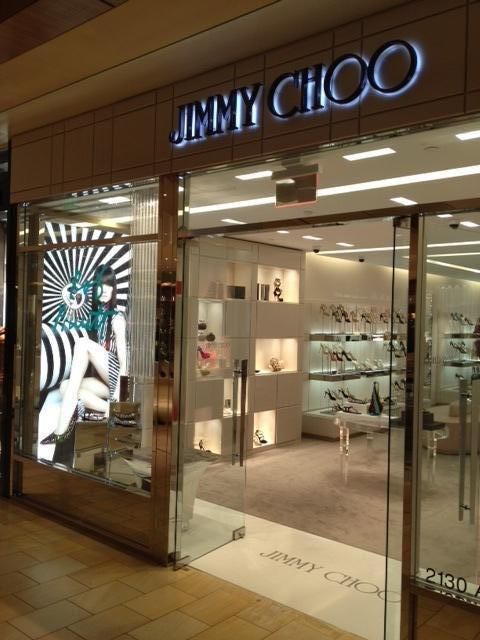
I was in the Galleria the other day when I saw this.

Rob Pruitt at Jimmy Choos
Rob Pruitt is no longer a mere artist--he's a brand

It's a little hard to see, but that's Rob Pruitt's name on the window on the left side of this Jimmy Choo storefront. The black and white image is also advertising Pruitt, and those shoes in the window were designed by him. I thought they looked hideous, but what do I know about fashionable ladies' shoes? I wasn't shocked to see this marriage of art and mall commercialism--in the same mall, you can see Yayoi Kusama-branded stuff at the Louis Vuitton store. But it does occur to me that once upon a time, this kind of thing would have been considered "selling out." Of course, we scoff at that now. The notion that your art should to some extent be above mere commerce seems quaint. It's something hippies would care about, and we have, as a society, been gleefully punching hippies for more than 30 years. But all you "sell-outs" beware--this election saw signs of the hippies punching back.

Share

Thursday, November 8, 2012

Pan Recommends for the week of November 8 to November 14

Robert Boyd

I will be out of town this weekend, so I will be missing a lot of really great stuff that's going on here--particularly the Cinema Arts Festival. This fourth iteration of the festival has so much good stuff being shown over the next few days that even if I was here, I'd be forced into making painful choices about what to see. Below are just a few of the movies and events I would be watching if I was in town. Take Thursday and Friday off and check out the Cinema Arts Festival (but don't miss out on the other art offerings this weekend).

THURSDAY

Cinema on the Verge at 4411 Montrose [runs through November 11]. Using some of the vacant gallery space at 4411 Montrose, the Cinema Arts Society is presenting several installations by film and video artists. These seems like a very interesting expansion of the Cinema Arts Festival's primary focus. The artists are Phil Solomon, Christopher Thomas Allen, Tara Jane O’Neil, Stacey Steers, George Griffin, and Joanna Priestley.


Tatsumi at the Sundance Theater, 2:00 PM. This is a film about the life and art of Yoshihiro Tatsumi, a Japanese manga artist famous for originating a genre of gritty, realistic comics (some of which have been published in English, including Good-Bye and The Push Man and Other Stories). Personally, I prefer the work of Yoshiharu Tsuge, but this movie should be pretty interesting.


Beauty is Embarrassing at the Sundance Theater, 6:15 PM. Anyone who saw Wayne White's great installation at the Rice Gallery in 2009 will want to see this documentary about the painter/puppeteer/cartoonist. It should be great.

Joe Goode: New Paintings at Texas Gallery, 6 pm [up through December 22]. Not as well-known as some of his Los Angeles peers like ed Ruscha, Joe Goode was a key pop-influenced artist in the region. He often worked milk bottles into his work, and his website indicates that despite the total obselence of milk bottles, they still play a big role in his work.

SATURDAY


United in Anger: A History of Act Up at the Sundance Theater at 2 pm. The AIDS Coalition to Unleash Power, aka ACT UP, was formed in 1987 and made an indelible mark with creative and powerful forms of activism. This looks like a pretty great documentary on those years.

Virginia Fleck and Steve Wiman at Front Gallery at 5 pm [up through December 22]. Two Austin artists will bring a lot of color to front Gallery. Virginia Flack produces collages from resused plastic and Steve Wiman does installations from similar sources. Even trash can be beautiful!

And there's a lot more happening this weekend, but I'm up against my deadline and a plane is waiting so I'll sign off here.


Share

Wednesday, November 7, 2012

Little Wooden Boxes by Clark Derbes

Robert Boyd 

When I walked into the Clark Derbes exhibit at Redbud Gallery, I liked what I saw--crude wooden boxes with geometric designs painted on them. They charmed me right away. I liked how the geometric painting wasn't taped-off and precise and how the corners of the boxes felt rough-hewn as opposed to carefully machined.

 
Clark Derbes, Charles II, carved and polychromed poplar maple wood, 2012

But wait--as you look more closely you realize that these aren't boxes at all, but shallow relief sculptures. The angles carved into the wood combined with the painting give them a boxy illusion when seen from head on, but as sculptures, they are far shallower than that appear.

 
Clark Derbes, Charles II, carved and polychromed poplar maple wood, 2012

I typically don't like art built around optical illusions. It's too gimmicky. Once the illusion starts to bore you, what's left? Usually nothing--the trickery was the whole point. But that isn't the case here. What attracted me wasn't the illusion but the beautiful colors and folkish approach. It's the imperfections of these hand-made objects that appeal to me.


Clark Derbes, Phillip, carved and polychromed poplar maple wood, 2012


Clark Derbes, Phillip, carved and polychromed poplar maple wood, 2012

While the illusion is quite strong, Derbes is in effect doing nothing more than what relief sculptors have been doing since ancient Greece--using a shallow space to depict a deep space. It's clever, sure, but it's not what these piece are about. 


Clark Derbes, Robin, carved and polychromed poplar maple wood, 2012

To me, they are a joining of American folk/outsider art traditions and modernism. This is modernism as if it were being created by a naive artist or a self-taught artist. One might be reminded of Marisol, but she always infused her work with figurative elements. Derbes is rigorously abstract. I am also reminded of the wooden toys made by Lyonel Feininger and Joaquin Torres-Garcia (as well as Torres-Garcia's wood assemblages).


Clark Derbes, Jefferson, carved and polychromed poplar maple wood, 2012

Charles Jencks, writing about post-modernism in architecture, said that post-modernism allowed an architect to draw from the entire history of architecture, up to and including modernism. Derbes, with his chainsawed worn boxes, is choosing a history for these pieces, whether intentionally or not. As Borges wrote in "Kafka and His Precursors," each work in the present creates its own past. In short, Derbes not only produces charming pieces of polychromed carved wood, but he suggest an art history that consists of Marisol, Feininger, Torres-Garcia, various self-taught woodcarvers, etc.

There is a very entertaining short film of Derbes at work by Matt Day which can be viewed here.

Share

Tuesday, November 6, 2012

At the City Council Meeting

Robert Boyd

Friday night, I attended a city council meeting for the cities of Bismark, Oakland, Tempe, San Antonio, Houston, and Portland, Oregan. Except what I actually attended was a night of amateur theatricals called City Council Meeting (put on by Diverse Works) using as its scripts parts of actual city council meetings that occurred in those various cities. This was a piece of participatory art, to use the term favored by Claire Bishop in her book Artificial Hells: Participatory Art and the Politics of Spectatorship. The audience were the performers to a certain extent. It was a highly formalized and controlled performance--each performer was reading from scripts. There was no improvisation. This evening's version took place at the El Dorado Ballroom over by Project Row Houses.

The audience was divided into four general roles--city councilor (including the mayor), speaker, supporter or bystander. I chose to be a bystander so I could take notes and take a few photos. That was a compromise, though, because the piece was for the participants. They stood the most to gain from participating.


The staging was minimal. The participants weren't dressed in suits and ties or otherwise made to look like a real city council. There was an elevated platform with a long table behind which the city council and the mayor say, facing out towards the bystanders and supporters. There was a small table and chair facing the city council where the various speakers would sit. Flags on either end of the long table were the only concessions to set decoration.

And sitting in the audience, I could see lots of people involved with the local art scene, lots of teenagers (and even younger kids) with their parents, and a few other people. The kids were from the Project Row Houses After School Program and from Kinkaid, an elite private school. I was told that the Kinkaid kids were promised that if they attended, they could drop their lowest test score, but I don't know if this was true. It was pretty much a full house.

The performance started out as a celebration of a retiring city councilor from Bismark, North Dakota. She had served for 20 something years, and there was a lot of jokey comaraderie as she official resigned. But curiously, she was played by a man. And the nameplates for the various city councilors and the mayor only occasionally matched in gender or ethnicity with the participant playing that role. The reason for this would become clear later. In Bismark, the retiring city councilor was replaced by a new one who we saw sworn in. She was played by one of the kids in the Project Row Houses After School Program.

At this point, we in the audience were moved to the back of the room for a few minutes, then asked to return to our seats. It wasn't at all obvious why this was happening.


Audience in the back of the room

Suddenly, all the name plates for the city councilors were changed. Now it's San Antonio and mayor Julian Castro, a rising Democratic star, is presiding. Two young people speak about their experiences with some program in San Antonio, but they both make heartfelt pleas for the government of San Antonio not to ignore East San Antonio.

Then there is a sudden change to Houston. The subject was "Renew Houston," a new flood-control infrastructure upgrade. This program was to be paid for by a new fee  and that the fee would apply to churches along with all other property owners. That was one controversial aspect. Another was that city councilor Steve Costello had, until recently, been a contractor with the city for this kind of infrastructure. Speakers addressed both these controversies, and astonishingly, Steve Costello played himself, reading his own words from that city council meeting which took place two years ago, I think.


Then it switched again, this time to the city council of Tempe, Arizona, in which the mayor gave a very strange speech. The next was an Oakland city council, which seemed tense and chaotic, with a very loud gavel being hammered every now and then. the first speaker seemed like a hippie-type, speaking about peace, love and understanding. Then a speaker came up and confessed he had just been released from jail, which got a big laugh from the audience. But that was only because the meetings were context-free. It turned out he had been an Occupy protester caught up in the big clashes between the police and the protesters in Oakland.


Hence the tense, chaotic feeling of the Oakland section. The loud gavel was to quiet the rowdy spectators, who were in this reenactment not present.

This part of the show ended with a bizarre encounter in a Portland, OR, city council meeting where a citizen speaker complained of the disgusting garbage on the street in his neighborhood, including used condoms, and proceeded to dump some of this garbage on the desk in front of him, causing the city council to declare a recess until it could be cleaned.


The idea--using a series of transcripts of city councils to illustrate a certain range of civic engagement that exists in the U.S., is good. The creators of this performance, Aaron Landsman, Mallory Catlett and Jim Findlay,  realized that city council meetings were one of the few venues where civic engagement was enacted as a dialogue--in short, where the process could be easily turned into drama. And it worked--you had a range of emotions, from the fond farewell to a colleague to a charged post-riot meeting. And none of it had to be contrived by a playwright--it was, in a sense, "found" drama. Not to diminish the art of writing plays, but the fact that these bits had actually happened, that these words had actually been spoken in actual city council meetings, gave the work an incredible sense of authenticity.

Authenticity seems to be one of the frequent goals for participatory art. Hence when Jeremy Deller created The Battle of Orgreave (2001), the participants were comprised of two groups, each with their own concern for authenticity--former miners who had participated in the original clash with riot police in 1984 that the piece was recreating, and battle reenactors, who usually reenact famous battles from English history and have a fetish for authenticity.

But authenticity is curiously undermined by amateurishness. I was a "bystander," which effectively made me an audience member. And as the speakers and city councilors read their lines, I often found myself wishing they were skilled actors. Some of them embodied their roles pretty well, but many were awkward actors (just as I know I would have been if I had been in one of those roles). It was cute when the young kids of the project Row Houses After School Program were reading their parts, stumbling over hard words, but that awkwardness lessened the drama. The creators of the project have spoken of empathy, but  the amateur acting made empathy harder for me.

But perhaps not for the speakers themselves. With such a project, you have to ask who it's for. Stephen Duncombe and Steve Lambert chided critics in "An Open Letter to Critics Writing About Political Art" to consider who the art was for--who was the intended audience. And whether or not the art was reaching that audience effectively or at all. A good example of this is Hans Haacke. His intended audience for his most powerful pieces were the middle class liberals who went to art museums. He had researched them thoroughly through polls. And he made work that was aimed at them and which forced them to consider the complicity of their innocent art viewing with various crimes and immoral acts committed by large institutions in the world.

In this case, the art wasn't for me, a mere bystander, as much as it was for the active participants--the city councilors and the speakers. By taking on these roles, however awkwardly, they got to put themselves inside someone else's shoes--someone who was civically engaged. They got to see the love for the retiring city councilor or the tension of the post-Occupy riot meeting from the inside. How effective this was for them, I don't know. But as a viewer, I wish it had been more of a traditional theatrical performance.

The final part of the program had Steve Costello facing the project Row Houses kids. They seemed to be having a dialogue, but they were actually speaking about two different things. I found Costello's piece quite interesting. He talked about how a group of engineers with serious concerns about infrastructure in this city decided to pick their least nerdy member to run for city council so that they'd have someone on the inside to represent their interests. It was fascinating because it presented what often reads as a bad story (self-interested politicians) as a good story (a group with special knowledge because of their work picking one of their own to advocate for projects based on that special knowledge). Considering the costs to Costello (being investigated and accused in council of having a conflict of interest), the story he told was unexpectedly poignant.


Steve Costello and the kids from the Project Row Houses After School Program

How effective this was as activism is an open question, but it seems unlikely to have been more effective than "non-art" activism. For instance, activists who train folks to speak at city council meetings and round up concerned citizens to attend such as Nick Cooper with Food Not Bombs and their responses to the anti-feeding laws. This is one of Claire Bishop's complaints--that participatory art often falls pretty short as activism, but because it's art it ends up getting graded on a curve. (The opposite complaint is also true--we are often willing to give bad art a passing grade because we agree with its political stance.)  But I will take Duncombe and Lambert's instructions literally and say that as activism, City Council Meeting seemed likely to fall short, although time will tell. Will this encourage more people to be civically engaged, to go to city council meetings to talk about flooding or feeding the homeless or other issues that are important to them? I'm dubious, but who knows what those Project Row House After School Program kids will be doing in 20 years? We can't know if City Council Meeting has kickstarted the career of a future leader or activist.

Share

Thursday, November 1, 2012

It's an Ill Wind

Robert Boyd


Sure it's killed 157 people so far, caused billions of dollar in damages, and flooded galleries throughout Chelsea, but at least one art collector came out ahead because of Sandy. At the delayed Phillips de Pury "Editions" auction in New York City yesterday, this collector reasoned the floor bidding would be, let's say, light. So he phoned in a "crazy lowball" bid for a Jasper Johns and won it. Bargains are there if you are clever enough to spot them. (Which is why he's successful and you're not!)

Share

Pan Recommends for the week of November 1 to November 7

All kinds of events this week--it's difficult to spotlight just a few. But here are some we like.

THURSDAY

Windows on Main featuring new work by Rosine Kouamen and Rahul Mitra at the corner of Main St and Winbern st. on Thursday, November 1st, 2012 at 7pm. That's right by Tacos-a-GoGo which means you can have a cheap tasty treat and look at art. Bonus!

City Council Meeting by Aaron Landsman, Mallory Catlett and Jim Findlay at Palm Center, 2nd Floor Courtroom, November 1, 2012 from 7:30 pm – 9:30 pm. To use Claire Bishop's term, this is a piece of participatory artwork, reproducing a city council meeting using volunteer "actors"--including maybe you! You can read more about it here. It will be performed tomorrow at the El Dorado Ballroom and Saturday at noon at Diverse Works, but the Palm Center courtroom seems like the most ideal setting for it.

FRIDAY

Projection & Amplification by Sandy Ewen at Spacetaker ARC, 6 pm, November 2 (running through December 14). The word here is "micro-collages," collages of materials so small that they must be blown up (either on paper or via projection) to be seen. This exhibit includes a bunch of musical performances (the artist is also a guitarist), both on the opening night and many subsequent days during its run.

SATURDAY

Sharon Engelstein: I like that very much a lot at Devin Borden Gallery, 6 pm – 8 pm, November 3 (through December 22). Wax and ceramic sculptures. Engelstein writes, "I recently fell in love with wax." Come see if wax loves her back!


Update: This event has been cancelled.  Bert Long: Everything Bert with Melting Pot at the Houston Museum of African American Culture, November 3 (through January 6, 2013).
The reception for this show had to be postponed when Bert Long had an accident, but now it's happening and is supposed to include a 4 ton ice sculpture (illustrated above). Wow!

And this just scratches the surface for what looks like a busy weekend, with shows opening at Box 13, PG Contemporary, CAMH, EMERGEncy Room, Williams Tower Gallery, East End StudioGallery and much more. Apparently everyone has had time to decompress from the art fairs and do their own things again.

Share